
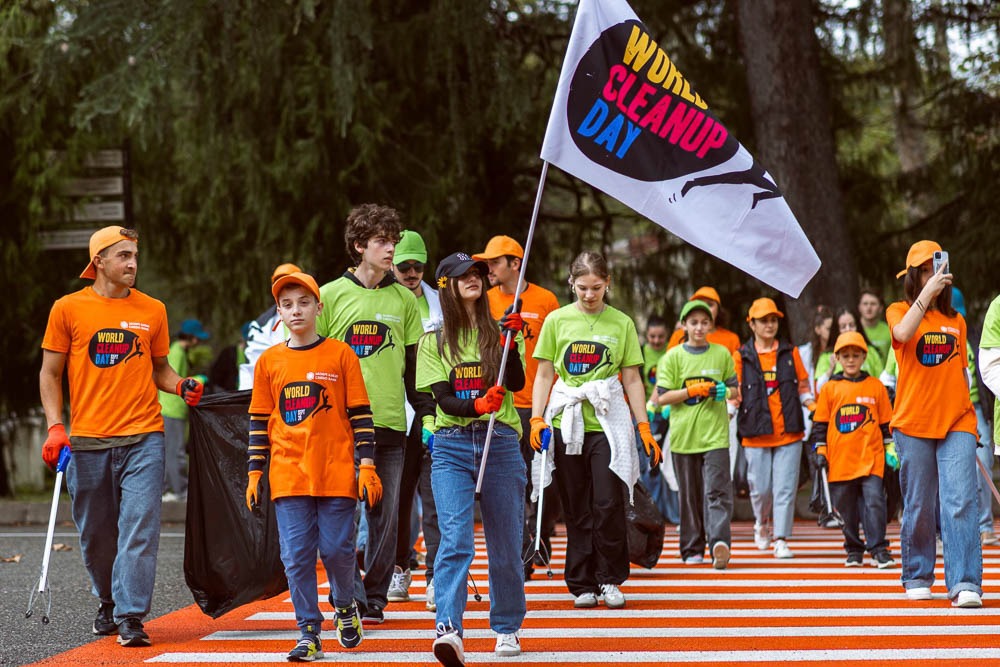
The numbers are in for World Cleanup Day 2025, led by Let’s Do It World network on 20 September—and they tell an extraordinary story of global impact.
In the digital world, 2.4 billion people were reached through media coverage, 1,600+ editorial articles were published between 11–28 September, and 429.4 million people engaged with the message on the day itself. These remarkable metrics, revealed through comprehensive analysis by our trusted media intelligence partner Meltwater, paint a picture of unprecedented global reach.
But the true impact happened on the ground. Beyond these statistics lies something far more powerful—millions of individual decisions to act, to care, to stand up for our shared home.
This year, a record-breaking 25 million people participated across 190 countries and territories. Twenty-five million hands picking up waste. Twenty-five million voices saying ‘enough.’ Twenty-five million reasons to believe in collective action.
Behind these global figures are local stories that statistics alone can never capture—moments of courage, community, and humanity.
In Ukraine, amid ongoing conflict, 255,000 people chose to clean their country—not just from waste, but as an act of dignity, resilience, and hope. Between air raids, they picked up litter as a declaration that normal life, care for the environment, and planning for the future matter even—especially—in the darkest times.
In Mozambique, an astonishing 4.8 million people joined the movement, including 5,300 schools. They collected 7,601 tonnes of waste while building something more valuable: a culture of environmental stewardship woven into the fabric of education itself, through sustained partnership with the Ministry of Education and Environment.
Estonia, where this global movement was born, mobilised 52,304 participants—a nation embodying the ‘Let’s Do It!’ spirit that sparked a worldwide phenomenon.
From Brazil’s 920,000 participants to Germany’s 672,600, from massive mobilisations in Mexico, France, Italy, Indonesia, USA, Latvia, Philippines, Cambodia, Kyrgyzstan, and Romania—the world spoke in one voice.
Indonesia led media coverage with 454 mentions, followed by Italy (178), China (135), France (124), and Bulgaria (98). In South Korea, a single platform—Naver—reached 53.3 million people through multiple articles.
But this wasn’t just about coverage—it was about a cultural shift. Social media mentions surged 100% compared to previous periods, indicating not just participation, but conversation. People weren’t just cleaning; they were talking about why it matters, sharing stories, inspiring neighbours, colleagues, and strangers across digital divides.
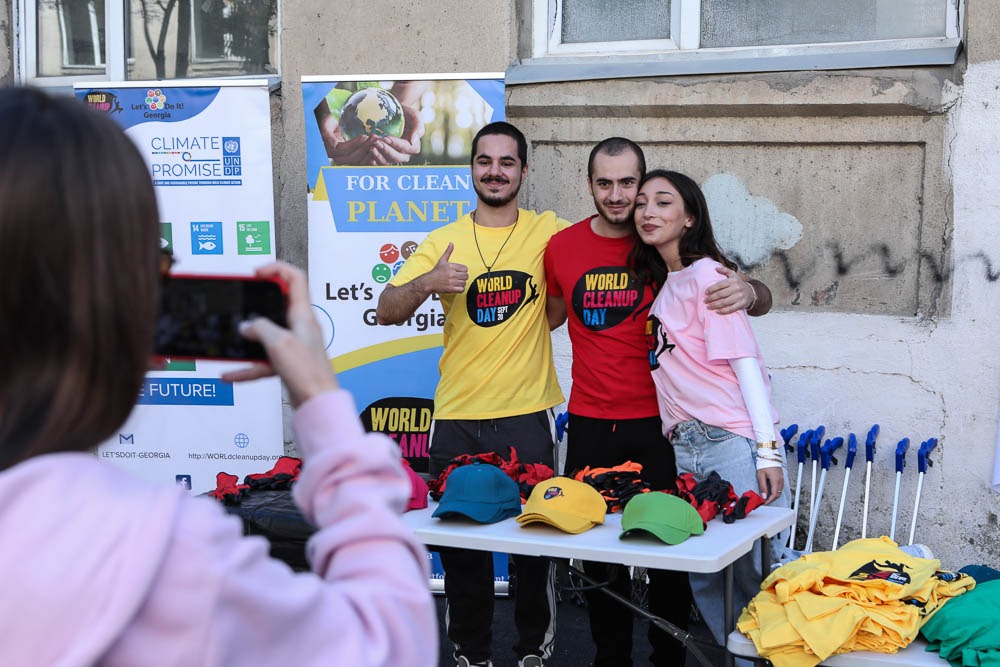
There’s science behind why this matters so profoundly. Research by Erica Chenoweth on social movements reveals that when a committed minority reaches 5% of a population (approximately 380 million people globally), entire systems can transform. This threshold creates a cultural tipping point where new approaches to waste and resource use become inevitable.
Since 2018, World Cleanup Day has cumulatively engaged 139 million participants across 211 countries and territories, collecting 873,289 tonnes of waste. We’ve reached approximately 1.7% of the global population through direct participation. But with 2.4 billion people exposed to the message in 2025 alone, we’re not just approaching that tipping point—we’re accelerating towards it.
The impact of World Cleanup Day 2025 extends far beyond the immediate removal of waste:
World Cleanup Day 2025 proved something essential: in times of global challenges, environmental action unites us. Not through force, not through politics, but through the simple, powerful act of people choosing to care for the one home we all share.
The question isn’t whether we can create a waste-free world. The question is: will we choose to be part of the critical mass that makes it inevitable?
Twenty-five million people in 2025 have already answered.
***
World Cleanup Day is coordinated by Let’s Do It World, headquartered in Tallinn, Estonia. Since 2024, it has been recognised as an official United Nations International Day, celebrated annually on 20 September.


.svg)