
On Earth Day, 22 April, people around the world took action — from planting trees to making new commitments for a more sustainable future. Alongside these efforts, a group of environmental leaders, educators, and policymakers gathered in Tallinn, Estonia to explore a more complex question behind everyday consumption: if goods are so cheap, who is paying the true cost?
A conference, “Cheap goods, heavy costs — who pays for cheap parcels?”, was co-organised on Earth Day with the involvement of Let’s Do It World and brought together voices from across business, academia, civil society, and government. While the conversation was rooted in Estonia, the questions raised reflect a global challenge.
Together, the participating organisations shaped a day of frank, evidence-based dialogue that dived deep into the mechanics of how modern consumption is engineered, and who bears the cost when it goes wrong.
A key contribution to the day came from a two-week investigative case study led by Siiri Tiivits-Putton (CEO of Let’s Do It World and board member of the Estonian Green Movement). The study examined ultra-low-cost global e-commerce platforms, analysing their user interface design, advertising flows, recommendation systems, and real user experiences. The findings reframed the entire conversation.
The interface of ultra-cheap global e-commerce platforms, such as TEMU, is designed to trigger fast, emotional decision-making. Infinite scrolling, visual reward signals, and relentless push notifications keep users in a state where critical thinking is systematically suppressed. The platform does not wait for a user to have a need — it creates the need, and then immediately satisfies it.
These effects are reinforced by nudging tactics and what designers call ‘dark patterns’: design choices intended to override a user’s rational preferences.
The result, as documented through real user behaviour in Tiivits-Putton’s study, is a pattern of consumption that is no longer based on need. Instead, it becomes:
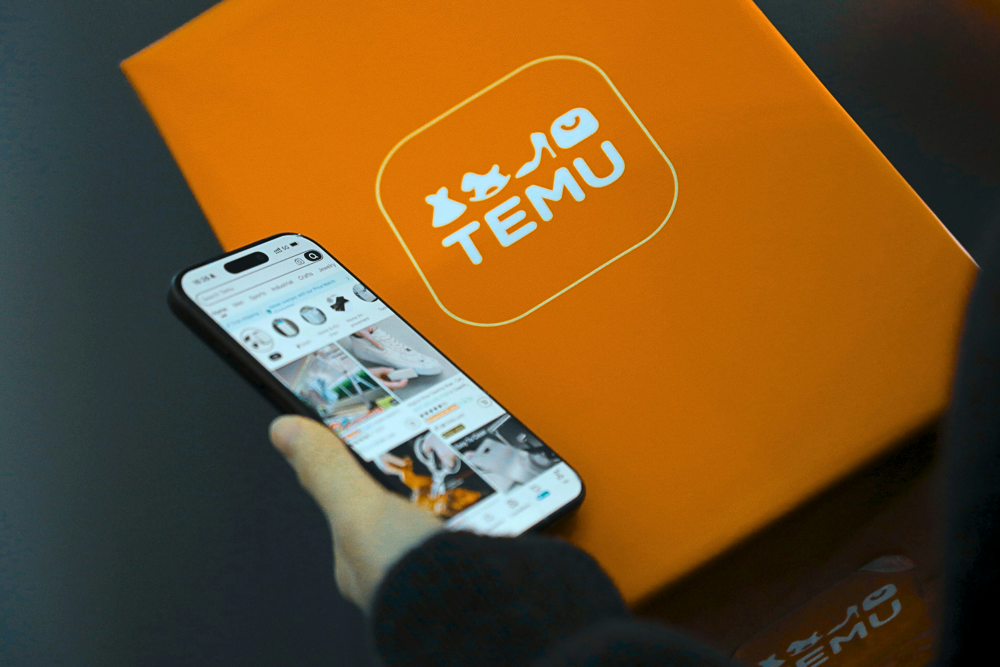
The conference framed its central argument around a deceptively simple question: ‘if the price tag on a Temu parcel does not reflect its true cost, who absorbs the difference?’
The most visible cost is financial. But the deeper cost is psychological. Compulsive buying disorder is estimated to affect between 1.8% and 16% of adults in the United States1, for example, and is strongly linked to anxiety, depression and low self-esteem. Platforms designed around dopamine-driven feedback loops are not neutral retailers; they function as behaviour-modification systems, and those most vulnerable are often those with the fewest resources to manage the consequences.
The environmental impact of cheap, fast, disposable goods is damaging at every stage. A substantial share of global emissions — around 60%2 — comes from household consumption, with consumer goods sectors like fashion and retail playing a significant role. . In Estonia, packages from China increased 8.4 times in a single year — from approximately 50,000 to 420,000 shipments per month , with around 30% of Omniva’s parcel volume now attributed to Temu3. At the same time, up to 700,000 microplastic fibres from cheap synthetic clothes can be released in a single wash cycle, entering water bodies such as the Baltic Sea4.
Product safety is another concern. A 2024 investigation by the European Consumer Organisation (BEUC), found that 96% of tested products from Temu and Shein failed to meet EU safety requirements5. For example, one necklace contained cadmium at a concentration of 85%, compared to the EU limit of 0.01%.
As the discussions developed, several key themes emerged. These reflected shared observations about how the current system operates and where its pressures are most visible:
1. Responsibility is fragmented — and that fragmentation is intentional
When a product is manufactured in China, sold through a Dutch-registered platform, shipped via Belgian logistics, and arrives in Estonia, no single actor bears clear accountability for its safety, environmental footprint, or disposal. This is not an accident of complexity. It is a structural advantage for the platforms and a structural disadvantage for regulators, communities, and consumers.
2. The EU is moving — but not fast enough
The EU customs reform removing the €150 import duty exemption is set for July 2026, helping to level the playing field between low-cost imports and local businesses. Extended producer responsibility for textiles was approved by the European Parliament in September 2025, placing greater responsibility on producers for the lifecycle and waste of their products. These are important steps — but communities are changing faster than legislation.
3. Local businesses are social infrastructure
The impact on local businesses is not only competitive — it is structural. When a local shop closes, a community loses more than a retail outlet. It loses a meeting place, a source of local tax revenue, a sponsor of the neighbourhood sports team, and an employer of local people.
4. Consumerism is a health issue
The platforms driving mass impulse purchasing deploy many of the same psychological mechanisms as gambling systems. When we talk about cheap platforms, we are also talking about mental health, children’s wellbeing, and the long-term social cost of normalising addiction-by-design.
5. Community is faster than policy
Governments respond to crises, but communities can anticipate them. Social norms are the fastest-moving forces for change — and they are entirely within our reach.
The leaders and organisations who gathered at the conference did not leave with analysis alone — they left with commitments.
The promises made on Earth Day are meaningful. They are also only the beginning. Among the actions discussed was a call for governments to take one concrete step within the next 12 months: the launch of a unified digital platform for local producers — for example, a single, certified, user-friendly gateway for Estonian producers, that makes buying local as simple as buying cheap.
It would be easy to leave this conversation feeling overwhelmed. The scale of the challenge — global supply chains, engineered psychology, fragmented regulation — can seem designed to make individuals feel powerless.
But the Earth does not need perfect consumers. It needs present citizens: people who ask where things come from, what they cost the world, and whether there is a better way.
On Earth Day, those questions were asked out loud, collectively. And asking difficult questions is where every change begins.



.svg)