
Every year on World Cleanup Day, millions of people pick up a bag, put on gloves, and head out to their nearest street, beach, or market to clean up. But behind every one of those clean-ups is a leader – someone who made the first phone call, printed the first poster, or simply showed up first.
Ahead of World Cleanup Day 2026, we asked three of our country leaders to share the moments that shaped their journey as champions for a cleaner planet. Their stories, though separated by thousands of kilometres and three decades of history, circle back to the same truth: change starts small, and it starts with people.
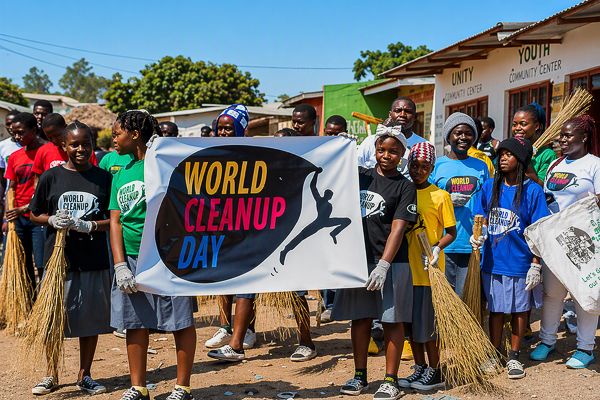
In Malawi, Let’s Do It World (LDIW) Country Leader Daniel Mwakameka remembers the morning his team set out from their office with only a handful of volunteers, heading to a local market for a clean-up.
"We started off from our office with a handful of people heading to one of the local markets for the clean-up," Daniel recalls. "When we reached there, we had a small open-air public talk to raise awareness of the event and the need for everyone to be responsible and become a champion for sustainable waste management."
What happened next surprised even him. As the group began collecting waste – no more than fifty people at first, chanting clean-up songs in local languages – passers-by started putting down what they were carrying and joining in.
"Surprisingly, we noticed that everyone started joining the activity. We ended up with double the size of the group we started with, and the clean-up event was completed even earlier than we had planned."
For Daniel, the lesson was simple but powerful: clean-ups move faster, and communities grow stronger, when everyone pitches in. "Waste management should not be a duty but rather a habit for everyone, because waste disposal is a human habit," he says. It’s a philosophy that captures the spirit of grassroots organising across the LDIW network – start small, stay visible, and let momentum do the rest.
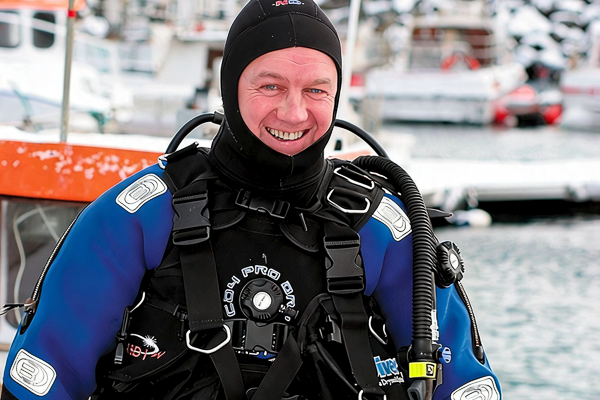
If Daniel’s story shows how quickly a clean-up can grow in a single morning, Tómas J. Knútsson’s story shows what that same spirit can build over thirty years.
Tómas is the founder of the Blue Army, Iceland’s underwater clean-up movement, and its story begins not on land but beneath the waves. In 1995, while working as a scuba diving instructor, Tómas was diving in a local harbour when he witnessed a truck driver dump a full load of packaged fish products – bearing Iceland’s world-famous "Product of Iceland" label – straight into the ocean.
"This moment led to my campaign to fight for the ocean, and my students that I was with that day backed me up and named the group The Blue Army," he says. "The rest is history."
A year later, Tómas brought something few people had ever seen to a room full of harbour masters: underwater photographs of what was actually sitting on the ocean floor beneath Iceland’s ports. "They were in shock and felt sorry for the ugliness of the ocean floor in their harbours," he remembers. The reaction didn’t stop at sympathy – it led directly to national legislation banning the dumping of rubbish overboard, and every municipality was required to set up harbour waste management programmes.
The Blue Army spent its first five years running underwater clean-ups, with national television covering their campaign until, in 1999, the Icelandic government pledged its first-ever funding: $200. It wasn’t much, but it was a start – and Tómas’s advice for anyone in that position is blunt: "Just do not give up."
That persistence paid off. Municipalities across the Reykjanes peninsula began funding local sports clubs for every clean-up they organised – 1,000 euros for a 20-person shoreline clean-up, all of it documented and published in local media. Over the following decades, more than 12,000 people from around the world have joined a Blue Army beach clean-up, and the group has carried out over 1,000 clean-up missions around Iceland, inspiring diver-led "armies" in other countries along the way.
Tómas’s practical advice for organisers is the kind that only comes from experience: call in municipal experts for heavy items, don’t over-exert your volunteers with long hours, provide proper gloves and bags, arrange local snacks and drinks, and always end with a group photo of everyone smiling. "Make it fun and easy, and praise the participants for the helping hand," he says. The Blue Army’s rallying cries have become part of Icelandic clean-up culture: Be a soldier for the ocean for the day, and Nothing beats a clean beach.
"We must all become environment soldiers for the planet," Tómas reflects. "We may never surrender, and through education we can divert from bad waste management to zero-waste programmes."
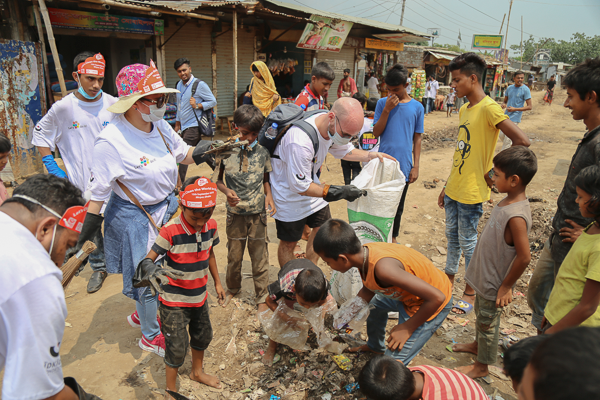
In Bangladesh, Country Leader Wahidul Haque didn’t expect his clean-up to turn into a lesson about how pollution hides in plain sight.
His team set out to clean roadsides, open spaces, and drainage channels in a densely populated neighbourhood – the kind of routine clean-up his volunteers had done before. But as they worked, they began noticing unusually large amounts of plastic packaging and discarded bottles clogging the drains, along with blocked water flow and unpleasant odours that pointed to a bigger problem than anyone had anticipated.
What struck Wahidul most, though, wasn’t the waste – it was who showed up to deal with it. "The most surprising and memorable thing during the clean-up activity was seeing so many local children eagerly join the effort," he says. "At first, I expected only the volunteers to pick up the rubbish, but the children became actively involved and helped collect litter from the roadside."
That moment reframed the whole event for him. "The enthusiasm of the children made me realise that even small actions can encourage a whole community to care more about the environment."
After the clean-up, Wahidul’s team didn’t just walk away – they sorted and measured what they’d collected, finding that plastic made up the majority of the debris. They shared those findings with the community, turning a single clean-up into an ongoing conversation about everyday disposal habits. "Waste does not disappear when it is thrown away," he explains. "Prevention is better than clean-up."
For Wahidul, the most effective long-term strategy has been to start with the youngest members of the community. He now makes a point of including young learners from slum areas in clean-up activities, so they can bring proper waste practices home and teach their own parents. His practical advice for anyone starting out mirrors that same simple logic: keep two bins – one for recyclables, one for general waste – because separating waste at the source is the single habit that makes everything else easier. For volunteers in the field, he recommends gloves, closed-toe shoes, careful handling of unknown or hazardous materials, and staying alert to traffic and water hazards while working.
"Every piece of litter removed – and every piece of litter not thrown away in the first place – helps protect the environment," he says. "Small, consistent actions by many people can create cleaner, safer, and healthier communities for everyone."
Malawi, Iceland, and Bangladesh could hardly be more different – a local market, a harbour floor, a city drainage channel. Daniel’s story took an hour; Tómas’s has taken thirty years and counting; Wahidul’s uncovered a problem no one knew was there until they started looking. And yet all three leaders arrive at the same conclusion: clean-ups are never really just about the waste. They’re about the moment a bystander picks up a bag, a government official sees a photograph they can’t unsee, or a child decides that this is their street too.
That’s the story behind every World Cleanup Day – millions of individual decisions to show up, made possible by leaders like Daniel, Tómas, and Wahidul who never stopped believing that habits, once built, spread.
***
World Cleanup Day 2026 takes place on 20 September. These stories are part of an ongoing series spotlighting the country leaders who make the world’s largest civic clean-up movement possible.



.svg)