
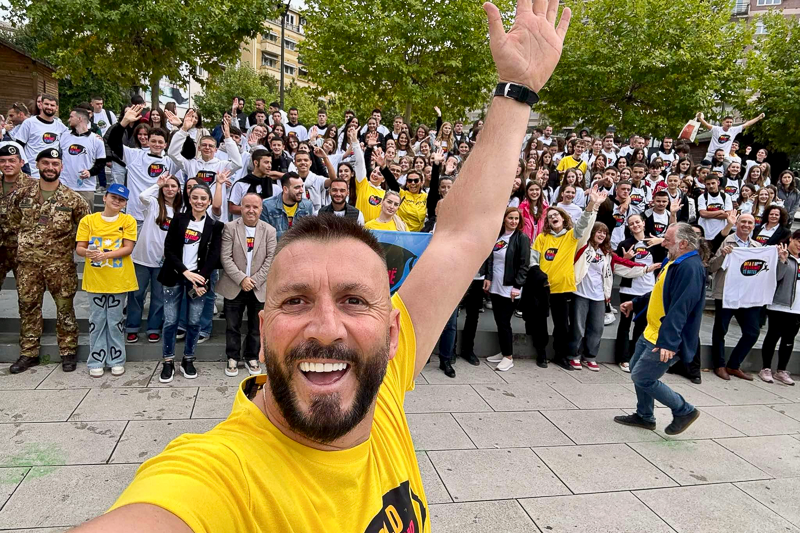
Every year, 5 June marks World Environment Day – the United Nations' principal vehicle for encouraging awareness and action for the protection of our environment. This year, we chose this date deliberately, purposefully and with deep conviction: it is the day Let’s Do It World officially launches Strive for Five, the campaign that will define how we build towards World Cleanup Day 2026 and beyond.
Research in complexity science and social dynamics has consistently shown that when just 5% of a population actively participates in a collective behaviour, that behaviour can tip and spread to become the new social norm – transforming entire communities from within. This is not wishful thinking. It is the science of tipping points, studied by researchers from Harvard to Gothenburg, from behavioural economists to complexity theorists. When a critical mass – approximately 5% – moves, the rest of society follows. Movements stop being movements and start becoming culture.
Across Let’s Do It World’s network of more than 190 countries, we have documented something extraordinary: several nations have already crossed the 5% threshold in World Cleanup Day participation, and their communities have been transformed as a result. These countries are the proof of concept.
Estonia, for example, has been the living laboratory for this idea since 2008. In a country of 1.3 million people, cleanups have become part of the national identity. Schools, companies and municipalities participate as a matter of course, not exception. What began as a single nationwide cleanup in 2008 has, over the years, evolved into a permanent civic culture and fundamentally changed perceptions of littering. Caring for shared spaces is simply part of what it means to be Estonian.
Latvia, who have mobilised over 5% of the population each year since 2018, offers a model of how corporate and civic participation can reinforce each other to achieve a tipping point. Media coverage, employer-organised cleanups and school programmes have converged to recalibrate what it means to be a responsible member of society. The President of Latvia serves as patron of the movement and officially opened the world's first Trees of Happiness Park in Valdemārpils. Litter is no longer seen as someone else’s problem – it is recognised as a shared challenge that affects collective pride.
Latvia is also a shining example of volunteer dedication. More than 150,000 people joined forces this year, marking over nine years of continuous and passionate participation in the Let’s Do It World network. The campaign builds on Latvia’s cleanup legacy, which began in 2008 when the Baltic States organised their first nationwide events. Today, Latvia hosts two national cleanup events each year: Lielā Talka in spring and World Cleanup Day in autumn. Encouragingly, the volume of collected waste has decreased by half, signalling positive behavioural and cultural change. In this small nation, more than 713,000 people have participated in cleanups over the years.
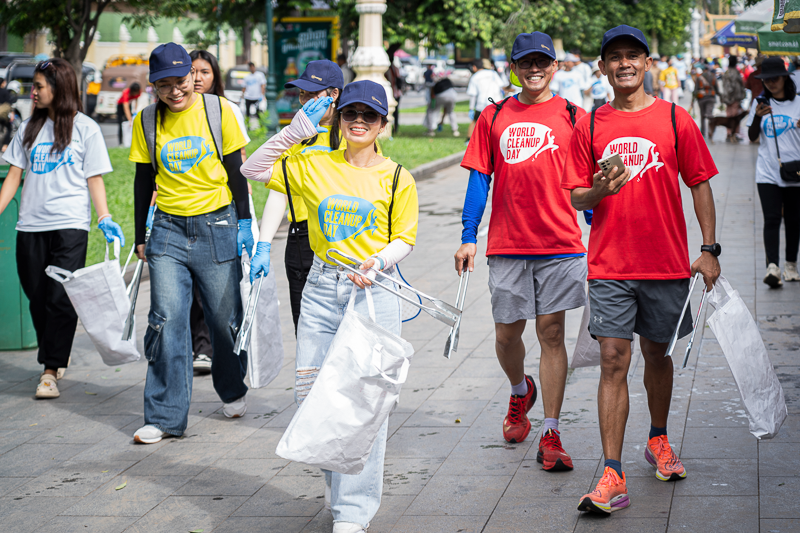
Reaching 5% triggers changes that extend far beyond the immediate act of collecting litter. Science and sociology provide six interlocking reasons why this threshold matters so profoundly – and why Strive for Five is structured around all of them.
When people act together and see results, they begin to believe they can shape their world. Collective efficacy – the shared belief that our joint actions matter – is the foundation of every lasting social change. Reaching 5% proves what is possible. It does not just clean a riverbank; it rewires a community’s sense of agency. And a community that believes it can act, does.
Norms shift when enough people model new behaviour publicly. Once 5% of a community participates in cleanup activities, careless littering becomes the social anomaly – not the norm. Behaviour is contagious, and positive contagion is the engine that Strive for Five is designed to harness. What begins as action becomes expectation. What begins as expectation becomes identity.
Shared physical action – working shoulder to shoulder towards a common goal – rebuilds the frayed fabric of community. Cleanup events create face-to-face moments of trust across age groups, political affiliations and social divides. In an era of fragmentation and digital distance, this is not a small thing. It is the civic glue that democratic societies depend upon to function.
Eco-anxiety and climate grief are growing global health challenges, particularly among younger generations who feel the weight of a crisis they did not create. Action is one of the most evidence-based antidotes. When people channel concern into contribution, they move from helplessness to agency – and that shift is profoundly healing. Strive for Five is, among other things, a prescription for collective wellbeing.
Participation shapes identity. Communities that clean together begin to define themselves as communities that care – and that identity persists long after the event ends. Over successive years of participation, it solidifies into something more durable: a story a community tells about itself, its values and what it expects of its members.Strive for Five is about making “we take care of this place” the default narrative.
Civic participation data – who shows up, where, how often and what they find – is among the most powerful inputs available for systemic environmental policy. When 5% acts, they generate evidence, identify hotspots and create the political will to tackle root causes rather than symptoms. The cleanup is the visible part. The data, the advocacy and the systemic change it enables are the iceberg beneath the surface.
Strive for Five is not asking governments to act first. It is not waiting for the perfect policy window or the right geopolitical moment. It is asking five people out of every hundred to show up – because once they do, science tells us the rest of the story writes itself.
We launch on 5 June because World Environment Day reminds us every year that the environment is not a political issue – it is the condition of all life. And we launch Strive for Five because we believe the 5% who are already ready to act deserve a name, a framework and a global community to belong to.
Get involved: https://www.worldcleanupday.org/get-involved



.svg)