
There is a particular kind of conversation that rarely happens in policy spaces. Not the kind where participants present what they hope to build, but the kind where someone walks in and says: it is already built — the infrastructure exists, the data is there.
The proof runs across 212 countries and 139 million people. The question is not whether this works — it is whether institutions are ready to partner with what already works, rather than starting again from scratch.
That was the conversation we brought to Brussels on the 25th of March.
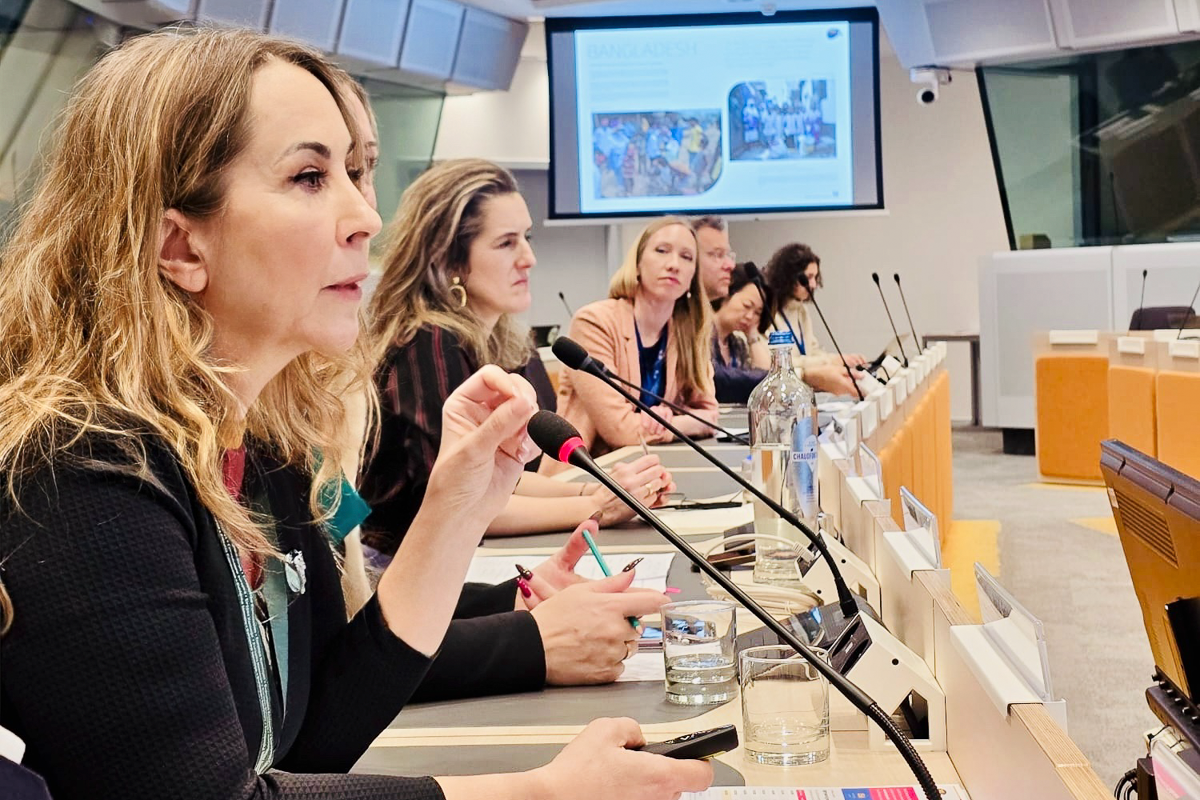
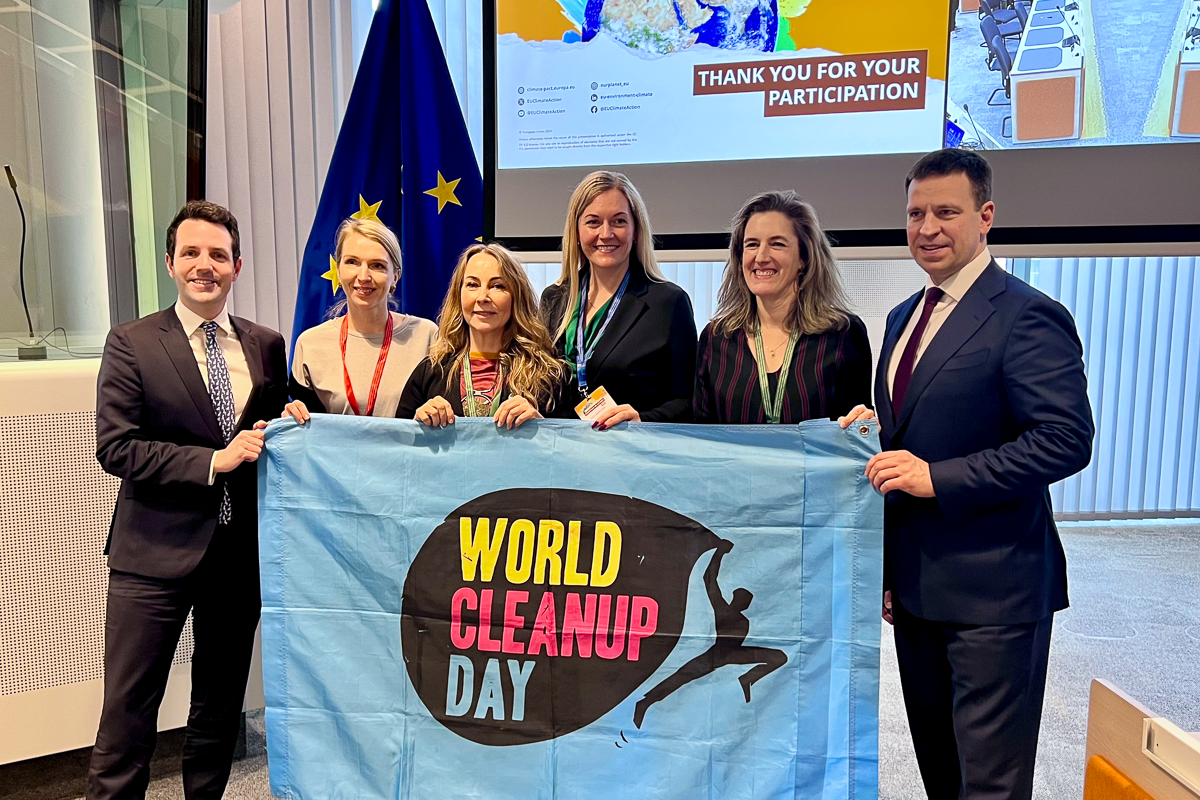
At the EU Climate Pact Annual Conference, Let's Do It World held a session called ‘From One to Many: Building Civic Infrastructure That Scales.’ As an EU Climate Pact partner, we were not there to inspire, we were there to make the case — evidence by evidence — that World Cleanup Day represents something the EU policy ecosystem has been searching for: a proven, replicable, self-governing civic mobilisation infrastructure, already operational at continental scale.
In the EU alone, World Cleanup Day mobilises approximately 3 million people every year. Globally, the number stands at 139 million. These are not passive supporters or petition signatories. They are people who physically show up — in their communities, on a single day, with a shared purpose.
What eight years of operational data from World Cleanup Day consistently shows is that when 5% of a community participates in a visible, coordinated civic action, something measurable begins to shift:
Collective efficacy takes hold. Communities stop waiting for someone else to act. Once the 5% moves, the remaining 95% can no longer dismiss collective effort as naive. The belief that we can actually do this together is not a feeling — it is a structural change in how a community functions.
Social norms recalibrate. When neighbours, colleagues, and strangers act together in public space, the norm itself moves. Littering becomes the deviant behaviour — not picking up. That shift doesn't require a campaign to sustain it. It sustains itself, because the visible majority has changed.
Social cohesion and civic trust deepen. Shared physical action across age, background, and neighbourhood builds relational bonds that outlast the event itself. Communities that clean together consistently show greater willingness to cooperate on other civic challenges — from local governance to environmental compliance.
Climate mental health improves. Eco-anxiety grows in direct proportion to the sense of helplessness. Local, visible action with immediate, tangible results restores agency — the belief that an individual's contribution connects to something larger than themselves. This is not a side benefit. It is a prerequisite for sustained civic engagement.
Civic identity reconstructs. People who act as stewards of their environment begin to identify as stewards. That identity shift changes how people vote, consume, and engage with institutions — long after September 20 has passed. Slovenia's journey, for example, of moving from mass cleanup participation in 2010 to becoming the EU's second-highest recycling nation, is not a coincidence. It is a case study in what sustained civic identity can produce at national scale.
These are the building blocks of lasting societal change — and they are measurable, replicable, and already happening across Europe.
We have solved mobilisation. Let's Do It World built the world's largest civic mobilisation network — from a single cleanup in Estonia in 2008 to 212 countries, within a decade — by solving the hardest operational problems: governance without centralisation, replication without loss of coherence, and leadership development at scale.
The bigger challenge we face now is not getting people to show up. It is making the change they create durable. And that requires something we cannot do alone: the sustained involvement of institutions, media, and structural partners who stay beyond the moment of the event.
We know how to move people. What is missing is not the solution — it is the alliance around it.
Our session panel brought together voices who understand both sides of that gap. Jüri Ratas, MEP for Estonia and former Prime Minister, brought the perspective of national leadership and EU institutional engagement. Anna Gril, Vice President of World cleanup Day France spoke about France experience, Heidi Solba, President and Head of Global Network as well EU Climate Pack Ambassador, spoke about the scaling civic through organisational structures and opportunities about the social change, Karina Mikelsone, Development Process Manager and sustainability leader at Ādaži Municipality in Latvia, brought the ground-level reality of what civic infrastructure looks like when it reaches local governance.
Our conversation was moderated by Colm Flynn — Irish broadcaster, Vatican Correspondent for EWTN News, and a media partner of this movement for ten years. His is a perspective earned in the field, not the conference room, and it showed.
The question that structured our entire session was this: What if the solution already exists — and what is missing is the alliance around it? We did not answer it fully, that was not the point. The point was to put it on the table, in a room full of people who have the institutional weight to act on it.



.svg)